Mindset & Psychology
Stop trying to play perfect poker
Stop chasing perfect poker. Learn why exploitative poker strategy often wins more by targeting the mistakes your opponents actually make.
Blog
Stop chasing perfect poker. Learn why exploitative poker strategy often wins more by targeting the mistakes your opponents actually make.
Playing poker for fun and playing for a living are two different games. Why you can't do both at once, and why your loose calls are perfectly fine.
When you can't read your opponent, panic is your real enemy. Here's the practical protocol for playing your range smartly without a clear read.
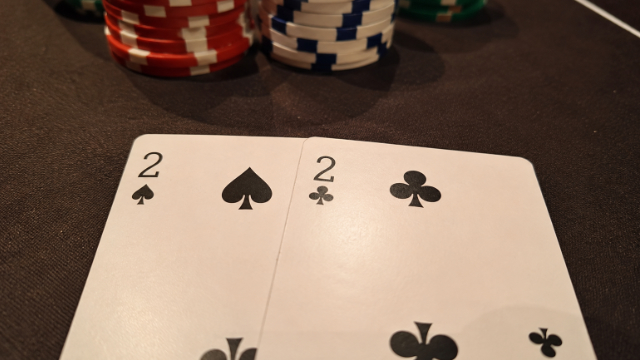
Pocket twos get mocked at every table, but there are spots where 2-2 is genuinely strong. Here's exactly when to play it and when to fold.
Think you bluff at the right frequency? Most intermediate players are over-bluffing in the wrong spots. Here is why it happens and how to fix it.
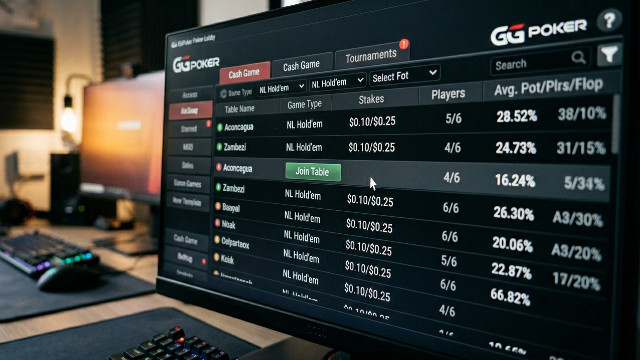
Table selection used to be free money. In today's online poker, it might just be a time sink. Here's why the math no longer works the way it used to.
Pocket pairs 66 through 99 face an overcard on the flop most of the time. Learn preflop raise rules, set mining math and how to play each street.
Online poker deals 3x more hands per hour than live. That's great if your game is solid, but the same volume multiplies every leak and mistake.
Bad players are not easier to beat in the short run: random lines, accidental monsters and bluffs that mean nothing. Here is why, and how to adjust.
Learn about blockers in poker beyond river bluffs: see how blocker effects shape squeeze decisions, 4-bet ranges and multiway pots more often.
What an overbet is in poker, when it works, and when it's just noise. Learn which boards and ranges reward betting bigger than the pot.
Cultural dimensions shape how poker players handle risk, bluffing and aggression. See how background changes style at the table and what you can learn.