
Why GGPoker’s tool ban is good news for everyone at the table
GGPoker has banned all third-party poker tools. Casual players get a fairer game, regulars a safer one, and poker gets its soul back.


For years, plenty of online poker tables had more participants than seats; six or nine players, and behind some of them a quiet crew of software: trackers logging every hand, HUDs turning opponents into percentages, scripts shuffling windows around the screen. In October 2026, GGPoker told the crew to go home.
All third-party poker software and automation tools are now banned from running alongside the GGPoker client, and from December 1, 2026 the client actively checks for them.
The news landed the way rule changes usually do: some applause, a lot of grumbling, a few very loud forum threads. Look past the noise, though, and the ban turns out to be one of the healthiest things to happen to online poker in a long time. It helps casual players for one reason, regulars for another, and the game itself for a third.





What actually changed on GGPoker
Some things were never allowed on GGPoker. Real-time assistance and solvers at the table were off limits, and so were external HUDs: the only stats overlay ever permitted on GG tables is the network’s own Smart HUD. What the network used to tolerate were tools running alongside the client that didn’t directly affect gameplay: trackers for reviewing your own hands, table managers, hotkey scripts.
That tolerance is over. On October 15, 2026, GGPoker published a five-part security package, and the headline was a ban on all third-party poker software and automation tools. The named list includes PokerTracker 4, Holdem Manager 3, Hand2Note, Jurojin, StarsCaption, DriveHUD 2, Intuitive Tables, Lobbyze, Equilab and AutoHotkey, followed by a catch-all for anything similar.
The rule itself is simple: fully close these programs before you open the client. Players have also been told they can no longer upload their own hand histories into tracking software. A follow-up statement fixed the enforcement date at December 1, when active detection and an in-client warning system switch on.
The same package added win-rate anomaly detection, a system built to spot players who win at rates consistent with real-time assistance. Keep that one in mind, because it comes back later.
The tool that showed your cards to someone else
Most likely, the ban came out of a breach.
This autumn it emerged that the update packages of two popular table tools, Jurojin and Intuitive Tables, had been tampered with. According to Jurojin, an attacker replaced the updates served to specific users between June 2025 and June 2026, and some of them carried a remote-access tool. The people on the receiving end were high-stakes players, and the reported result was that someone else could allegedly see their hole cards.
Sit with the irony for a second: software installed to gain an edge over the table ended up handing the biggest edge in poker, your cards, to a stranger.
The lesson is uncomfortable but simple. Every program running beside your poker client is a door into your session. Most of those doors are legit, but it only takes one that isn’t. GGPoker’s (probably rightful) answer was to close all of them.
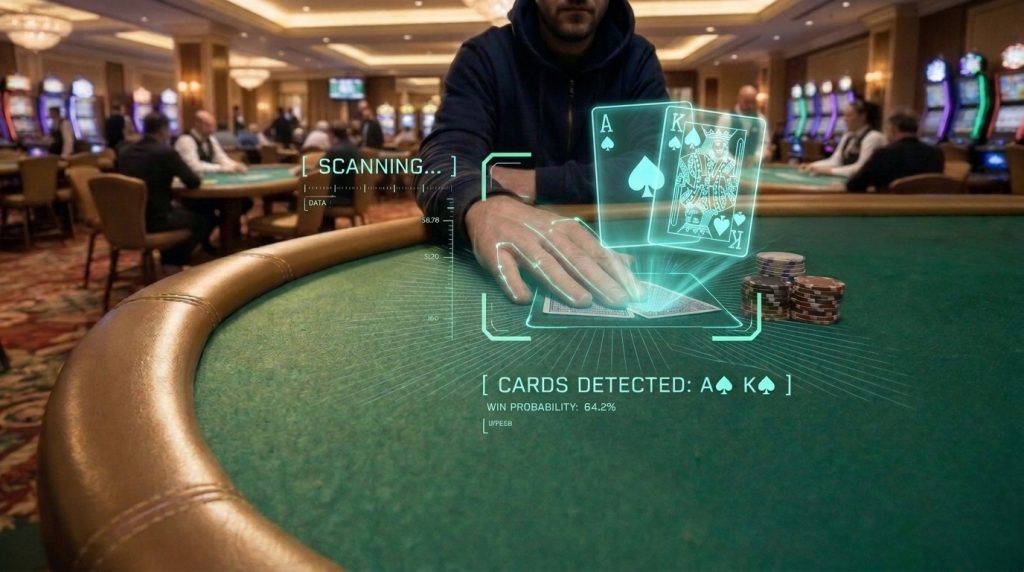
Where help ends and cheating begins
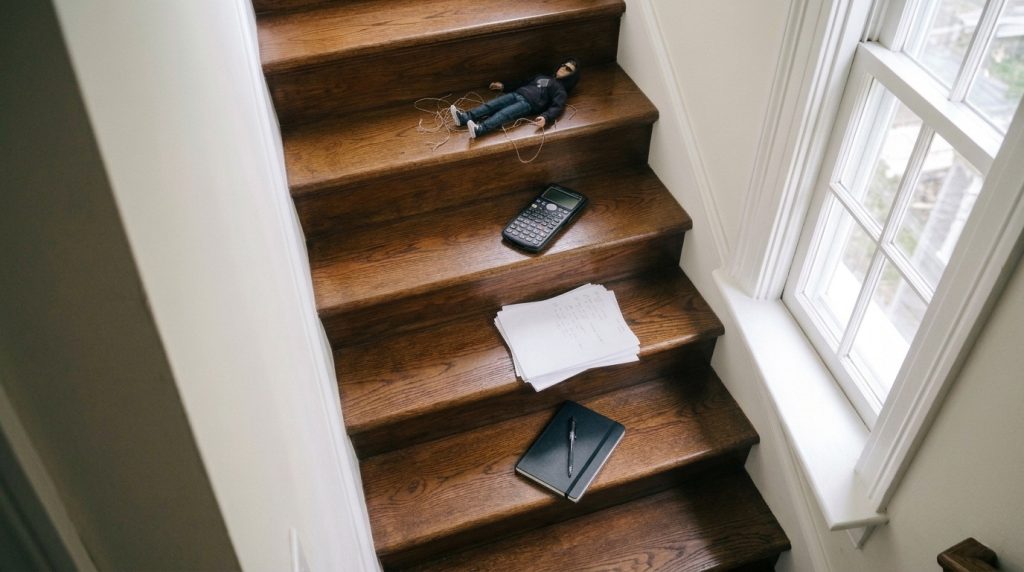
“Is using a HUD cheating?” is one of the most searched questions in online poker, and the answer depends on where you draw the line. Think of it as a staircase, from pure poker down to pure software:
- Your memory and your notes. You watched, you noticed, you remembered. This is poker in its oldest form.
- Studying after the session. Reviewing hands, running spots through training software, reading, watching videos, all with the client closed. This is homework, and it’s both allowed and smart.
- Third-party HUDs and trackers. They turn reads into numbers. The decision is still yours, but the read is no longer something you earned at the table: it’s computed from thousands of hands of data. External HUDs were never allowed at GG tables, and now trackers and every other tool running beside the client are off limits too. Breaking those rules to gain an edge has a name.
- Real-time assistance. Software tells you the play while you’re in the hand. This has always been cheating, on every site, with no gray area.
Look at the staircase from top to bottom and a pattern appears. Each step moves a little more of the game out of the player’s head and into a machine. HUDs turned reads into statistics. Solvers turned decisions into outputs. Somewhere along the way, a lot of people at the table stopped playing poker and started executing it.
Why the ban is good for everyone at the table
If you play for fun
- Nobody at the table has a private database on you. No one is quietly cross-referencing your last three months of hands while you decide whether to call.
- The game rewards what you came for. Reading a bet that feels off, timing a bluff, trusting your gut on the river. Those skills matter more when nobody is outsourcing theirs.
- Your own setup gets safer. Fewer programs touching the poker client means fewer ways for anyone to get at it. You might think you are smart and would never allow malware to run on your PC, the problem is that malware itself is getting smarter nowadays.
If you grind for a living
This is the part most coverage skipped and it’s where the ban makes the most sense.
- You were the target. The breach hit high-stakes players, the people running the most software. Less software means a smaller attack surface around your account and your bankroll.
- Healthy games pay your bills. Every regular knows where their win rate comes from. Casual players who enjoy themselves keep coming back, and casual players who feel profiled and outgunned quietly leave. A table that feels fair is a table that stays full.
- Cheaters steal from you first. Someone using real-time assistance profits most against strong, predictable opponents. Win-rate anomaly detection plus fewer hiding places for software makes their life much harder, and that money stays in honest pockets.
- The arms race is over. No more licenses, database maintenance, popup configurations and late-night troubleshooting. The edge goes back to where it belongs: study away from the table and skill at it.
- Multi-tabling help is on the way. GGPoker has announced native table swapping, layout locking and focus management, rolling out in phases.
Plenty of regulars aren’t thrilled, and that’s understandable. Losing a review workflow built over years hurts, and some will argue these tools were “just information.” Fair enough. But information that only some players can afford, configure and run is an edge bought outside the game. Which brings us to the obvious objection.

“But GGPoker has its own HUD”
It does. Smart HUD is built into the client and shows numbers on your opponents: how often they play a hand, how often they raise, how they react on the flop. So isn’t that the same thing?
Look at where the numbers come from. Smart HUD builds its stats only from hands you have personally seen that player play. A brand-new opponent starts at zero, for you and for everyone else. There is no giant database of the whole network, no stack of hand histories bought or collected elsewhere, nothing you can stuff with extra data. In practice, it’s your own memory of the table written down neatly.
That’s the real difference: symmetry. Built-in stats work the same way for everyone, cost nothing extra and need nothing installed. They become part of the table, like stack sizes or the pot. Third-party tools worked the other way around: what you knew depended on what you had bought, how well you had configured it, and how many hands you had piled up. That’s an arms race, and arms races always favor whoever spends the most.
On top of that, a native feature doesn’t open any extra doors on your computer. After this autumn, that point alone is hard to argue with.
So where’s the poker?
Strip away the policy language and the security details, and the ban comes down to one question.
When software reads the table for you, and software tells you the play, what’s left of the person in the seat? Where’s the intuition? Where’s the bluff? Where’s the gutshot you called because something about that bet just didn’t smell right?
Poker is a game of incomplete information played by people, and that’s the whole point. Hand the information gap to a machine and you’re left with programs arguing through human hands, which is a strange thing to sit down for on a Friday night. The tools were slowly, one convenience at a time, hollowing out the game.
The ban is a bet that poker is worth more when the player is the one actually playing. We think it will prove to be a good bet.
What changes for you from December 1
- Close it, don’t minimize it. Third-party poker software and automation tools, AutoHotkey included, must be fully closed before you launch GGPoker client.
- Expect the warning system. From December 1 the client flags accounts that have a restricted tool open. GGPoker hasn’t detailed what follows a warning, which is a good reason not to find out.
- Keep studying. Training software and hand review tools remain fair game for homework, as long as the client is closed.
- Use what’s built in. Native stats are there for everyone, and the new features will arrive over the coming months.
Every table used to have a few invisible guests, but From December 1 the only help you bring to the table is the one between your ears. That’s how poker was meant to be played, and how it stays fair and fun for everyone in the long run.